


Rabbi’s Update 9/4/2026
Dear Friends:
Why do we say the prayers that we say when we say them? It is a question that I am asked on occasion and I have actually given an adult education course called “Understanding the Siddur” twice. If you’re interested you can find YouTube videos of the class here:
The Rabbinical Assembly is currently offering a monthly class for rabbis taught by Prof. Joshua Kulp called “Key Teshuvot (Rabbinical Responsa) In Jewish History.” Yesterday we looked at a number of responsa on the question of praying for rain in the Southern Hemisphere.
We have a principle in Jewish law that we don’t pray for something which we know is impossible. The classic example is that if you hear there is a fire in your town, you can’t pray that it not be your house. Why? Because at the time you learned of the fire, your house is either already on fire or not on fire, and if it is on fire you are praying for God to change the past. (I suppose it would be perfectly permissible to pray that if your house is not already on fire, that the fire does not spread to it.)
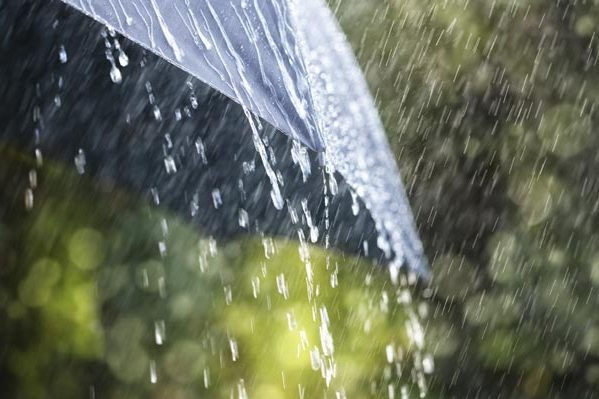
If you pray from the siddur with any regularity, you know that there are various points in the service where we either ask God for rain (which we do not do on Shabbat or holidays) or thank God for rain. The latter we do on Shabbat and holidays as well as weekdays, but only during certain times of the year. You may not realize that the timing of these prayers is connected to the rainy season in Israel or in Bavel (ancient Babylonia which is more or less today’s Iraq). Since in the Northeastern or Mid-Atlantic United States we don’t have a rainy season or a dry season, the connection to rainy or dry seasons is not immediately apparent.
This connection would be obvious to Israelis since there are several months of the year when it simply does not rain in Israel. (I remember when I was a teenager explaining to a visiting Israeli that we couldn’t leave our baseball gloves in the backyard overnight because they might be ruined if it rained, and he looked at me with utter confusion since he had just arrived on his first US visit and the thought that it might rain in July was inconceivable to him.) According to the halachic principle of not praying for the impossible, you would not pray for rain in July.
The question first of all is whether when we say these prayers we are actually praying for rain or are we merely doing what our ancestors did?
There are places in the Southern Hemisphere which do have rainy and dry seasons but they are opposite to those in Israel or Bavel. Should Jews in the Southern Hemisphere (South America, Australia and New Zealand, South Africa and other places) change their prayers in recognition of the different rainy seasons? I found the answers to be surprising and also all over the place.
Speaking of prayer, I will repeat a couple of requests from last week:
If you are a Kohen or Levi (or a Bat Kohen or Bat Levi, i.e. daughter of a Kohen or Levi father) you have inherited an important role in conveying God’s blessing to the congregation on the High Holy Days. If you have not participated in the ritual of Birkat Kohanim (the Priestly Blessing) in the past and would like to do so this year or are unsure and need more information, please contact me so we can discuss it.
If you can blow the Shofar and have not done so in our services before but are willing to do so, please contact me as well. We are always eager to expand our cadre of Ba’alei Tekiyah.
If you or someone you know is in need because of having been laid off, or has lost benefits of some type and needs immediate help, please let me know. I can access limited funds through the Jewish Federation almost immediately. For longer-term help, the Hebrew Free Loan Society will loan up to $18,000 interest-free and the Jewish Federation has set up a hotline to access assistance at 703-JCARING.
As a reminder, I am having drop-in hours on Thursday afternoons from 2 to 4 at the shul. For my drop-in hours, you do not need to make an appointment -- that would negate the whole point of drop-in hours -- but I’d urge you to check and make sure I am there regardless as sometimes there are unavoidable pastoral or other emergencies which might take me away from the building.
As always, if I can do anything for you or you need to talk, please contact me at rabbi@kehilatshalom.org rather than through the synagogue office. I am happy to meet you at the synagogue by appointment; if you want to speak with me it’s best to make an appointment rather than assuming I will be there when you stop by.
Additionally, if you know of a Kehilat Shalom congregant or another member of our Jewish community who could use a phone call, please let me know.
L’shalom,
Rabbi Charles L. Arian


Comments